


MR Neurography
MRI of the peripheral nerves
Do you suffer from pain, and your doctors could not find the cause despite various examinations? This pain is often chronic and can occur in several places simultaneously without responding to medication. Paralysis or a lack of sensation in your hands or feet often accompanies the pain. Magnetic resonance imaging (MRI) of the nerves (also MR neurography) at ARISTRA can precisely localise or exclude causes for your pain.
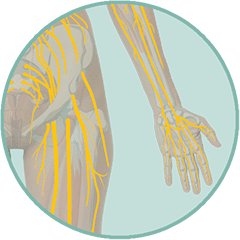
Symptoms for which MR neurography may be appropriate
- Unclear pain - when your doctor cannot find any cause despite various examinations.
- Persistent (chronic) pain
- Pain in several places at the same time (polyneuropathies)
- Sharp pains and sensations in the fingers and hands
- Sharp pains and sensations in the legs and feet
- Severe pain that does not respond to medication
- Paralysis
Experts for peripheral nerves

Prof. Dr. med.
Wibke Müller-Forell
Certified specialist for radiology
Expert for the orbita
Prof. Dr. med. Wibke Müller-Forell is Professor Emeritus at the Johannes Gutenberg University in Mainz. There she was acting head of the Institute for Neuroradiology. Her clinical focus is on diseases of the orbita, MR diagnostics of the central nervous system, and interventional stroke therapy.
Prof. Wibke Müller-Forell is Professor Emeritus at the University Mainz, where she was acting head of the Institute for Neuroradiology.
More about

Prof. Dr. med.
Philipp Bäumer
Certified specialist for radiology and neuroradiology
Expert for Neuroradiology
Prof. Dr. med. Philipp Bäumer is a specialist in radiology with an additional specialisation in neuroradiology. He completed his habilitation in neuroradiology at the University of Heidelberg, where he acquired great expertise in the imaging of peripheral nerves over many years.
Prof. Dr. med. Philipp Bäumer is a specialist in radiology with an additional qualification in neuroradiology. He is an expert in the imaging of peripheral nerves.
More about

Dr. med.
Michael Ho
Certified radiology specialist
Expert for Peripheral Nerves
Dr. med. Michael Ho is a certified radiology specialist. He has worked clinically and scientifically on peripheral nerve imaging at the University Hospital Heidelberg. Most recently, he worked at University Hospital Zurich, among others, and is an expert in this field. He is the managing director and co-founder of ARISTRA.
Dr. med. Michael Ho is a certified radiology specialist. He is an expert in peripheral nerve imaging and the managing director and co-founder of ARISTRA.
More about

PD Dr. med.
Johann-Martin Hempel
Certified radiology specialist
Expert in neuroradiology and head and neck radiology
PD Dr. med. Johann-Martin Hempel is an expert in neuroradiology and head and neck radiology. He practised for many years at the University Hospital of the Eberhard Karls University in Tübingen, where he completed his habilitation.
PD Dr. med. Johann-Martin Hempel is an expert in neuroradiology and head and neck radiology. He practised at the University Hospital in Tübingen for many years.
More about
Prof. Dr. med.
Wibke Müller-Forell
Certified specialist for radiology
Expert for the orbita
Prof. Dr. med. Wibke Müller-Forell is Professor Emeritus at the Johannes Gutenberg University in Mainz. There she was acting head of the Institute for Neuroradiology. Her clinical focus is on diseases of the orbita, MR diagnostics of the central nervous system, and interventional stroke therapy.
Prof. Wibke Müller-Forell is Professor Emeritus at the University Mainz, where she was acting head of the Institute for Neuroradiology.
More about
Prof. Dr. med.
Philipp Bäumer
Certified specialist for radiology and neuroradiology
Expert for Neuroradiology
Prof. Dr. med. Philipp Bäumer is a specialist in radiology with an additional specialisation in neuroradiology. He completed his habilitation in neuroradiology at the University of Heidelberg, where he acquired great expertise in the imaging of peripheral nerves over many years.
Prof. Dr. med. Philipp Bäumer is a specialist in radiology with an additional qualification in neuroradiology. He is an expert in the imaging of peripheral nerves.
More about
Dr. med.
Michael Ho
Certified radiology specialist
Expert for Peripheral Nerves
Dr. med. Michael Ho is a certified radiology specialist. He has worked clinically and scientifically on peripheral nerve imaging at the University Hospital Heidelberg. Most recently, he worked at University Hospital Zurich, among others, and is an expert in this field. He is the managing director and co-founder of ARISTRA.
Dr. med. Michael Ho is a certified radiology specialist. He is an expert in peripheral nerve imaging and the managing director and co-founder of ARISTRA.
More about
PD Dr. med.
Johann-Martin Hempel
Certified radiology specialist
Expert in neuroradiology and head and neck radiology
PD Dr. med. Johann-Martin Hempel is an expert in neuroradiology and head and neck radiology. He practised for many years at the University Hospital of the Eberhard Karls University in Tübingen, where he completed his habilitation.
PD Dr. med. Johann-Martin Hempel is an expert in neuroradiology and head and neck radiology. He practised at the University Hospital in Tübingen for many years.
More about
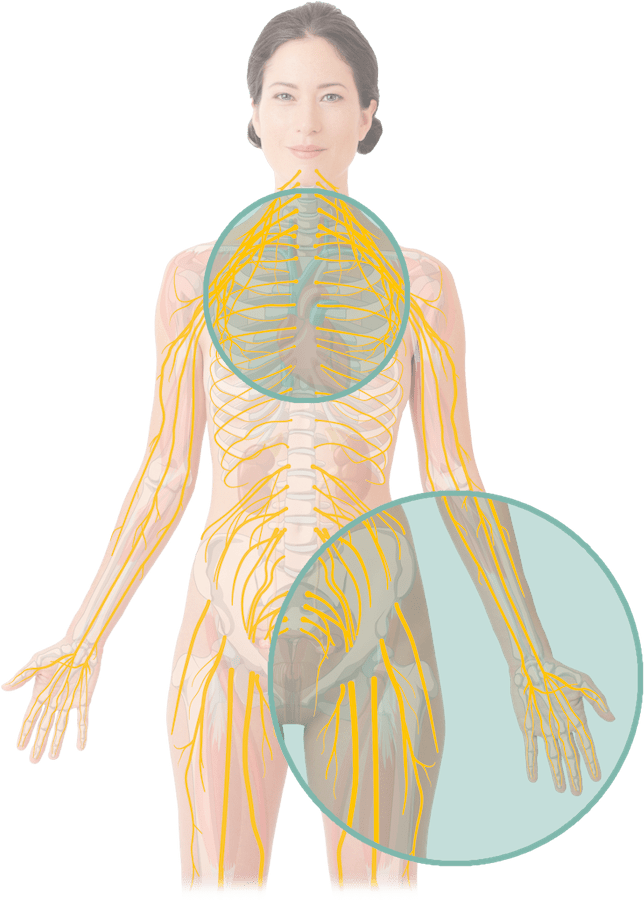
With MR neurography (also Nerve MRI), our radiologists examine affected regions of the body specifically. For example, the nerves can be visualised starting from the upper spine/neck via the arm-nerve plexus and the arm down to the fingers. In addition, we also examine the neighbouring anatomical structures such as joints, bones and muscles.
Pain can occur in very different ways. For example, it can "pull" or "shoot" from one region to another, such as from the lower back to the toes. However, it can also be limited to individual areas of the body and occur only at rest or only with exertion.
MR neurography is often the best examination method for initiating a suitable therapy to eliminate or alleviate your pain. The nerve MRI can be used to visualise longer sections of nerves precisely. With this scan, our experts can assess a nerve's condition down to the nerve bundle's level. In addition, we can clarify alternative causes for the respective pain.
Our peripheral nerve experts plan the MR examination carefully according to your pain history. Our lab technicians will scan you in the supine position, which usually takes approx. 30 minutes.
If necessary, we can also carry out targeted pain therapies under direct control in the MR scanner or ultrasound. In addition, ARISTRA offers counselling and second opinions for diseases of the nervous system.
The MRI examinations of the nerves at ARISTRA are continuously developed in cooperation with internationally recognised experts in neurological imaging. This means the images can be taken on-site using the most modern imaging technology and the latest scientific knowledge. Our neuroradiology experts evaluate your images.
Pain can occur in very different ways. For example, it can "pull" or "shoot" from one region to another, such as from the lower back to the toes. However, it can also be limited to individual areas of the body and occur only at rest or only with exertion.
MR neurography is often the best examination method for initiating a suitable therapy to eliminate or alleviate your pain. The nerve MRI can be used to visualise longer sections of nerves precisely. With this scan, our experts can assess a nerve's condition down to the nerve bundle's level. In addition, we can clarify alternative causes for the respective pain.
Our peripheral nerve experts plan the MR examination carefully according to your pain history. Our lab technicians will scan you in the supine position, which usually takes approx. 30 minutes.
If necessary, we can also carry out targeted pain therapies under direct control in the MR scanner or ultrasound. In addition, ARISTRA offers counselling and second opinions for diseases of the nervous system.
The MRI examinations of the nerves at ARISTRA are continuously developed in cooperation with internationally recognised experts in neurological imaging. This means the images can be taken on-site using the most modern imaging technology and the latest scientific knowledge. Our neuroradiology experts evaluate your images.
MR Neurography » At a glance
Duration and price
approx. 30 minutes
Upon request*
Examination
Radiation-free
Quick appointment
* Prices depend on the individual case. Furthermore, we must consider your insurance status and whether you are a national or international customer. In most locations in Germany, we can only work with patients who have private insurance or are self-paying.


Images of a MR Neurography

MRI image of the nerves of the lumbar-cruciate plexus.
The yellow arrows show thickened nerve roots.
The yellow arrows show thickened nerve roots.
MRI image of the nerves of the lumbar-cruciate plexus.
The yellow arrows show thickened nerve roots.
The yellow arrows show thickened nerve roots.

MRI image of the nerves of the brachial plexus.
The yellow arrows show thickened nerve roots.
The yellow arrows show thickened nerve roots.
MRI image of the nerves of the brachial plexus.
The yellow arrows show thickened nerve roots.
The yellow arrows show thickened nerve roots.

MRI scan of the elbow nerves
The white arrow shows the irritated ulnar nerve.
The white arrow shows the irritated ulnar nerve.
MRI scan of the elbow nerves
The white arrow shows the irritated ulnar nerve.
The white arrow shows the irritated ulnar nerve.

MRI image of the elbow
The yellow arrow points to the cause of the irritated ulnar nerve, a protruding bone spur.
The yellow arrow points to the cause of the irritated ulnar nerve, a protruding bone spur.
MRI image of the elbow
The yellow arrow points to the cause of the irritated ulnar nerve, a protruding bone spur.
The yellow arrow points to the cause of the irritated ulnar nerve, a protruding bone spur.

MRI image of the spinal cord and nerve exits
The yellow arrows point at the healthy nerve exits. The blue arrows indicate the completely (posterior root) or partially (anterior root) torn nerve exits after an accident.
The yellow arrows point at the healthy nerve exits. The blue arrows indicate the completely (posterior root) or partially (anterior root) torn nerve exits after an accident.
MRI image of the spinal cord and nerve exits
The yellow arrows point at the healthy nerve exits. The blue arrows indicate the completely (posterior root) or partially (anterior root) torn nerve exits after an accident.
The yellow arrows point at the healthy nerve exits. The blue arrows indicate the completely (posterior root) or partially (anterior root) torn nerve exits after an accident.

MRI image of the spinal cord and nerve exits
The yellow arrows point to the healthy outlets of the segmental nerves.
The yellow arrows point to the healthy outlets of the segmental nerves.
MRI image of the spinal cord and nerve exits
The yellow arrows point to the healthy outlets of the segmental nerves.
The yellow arrows point to the healthy outlets of the segmental nerves.

Implementation of MRI-guided periradicular therapy
Implementation of MRI-guided periradicular therapy


Make an MRI appointment
We can usually offer you an appointment for an MRI examination at short notice. You can request your preferred appointment via this form.